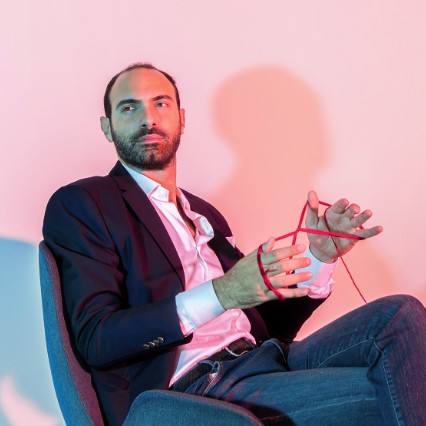
Lukas Michel
Lukas Michel is Developer Evangelist for the Vaillant Group’s API Developer Programme. For him, thinking outside the box means questioning why the box even exists in the first place.
Lukas Michel, please explain your role at the Vaillant Group.
I am a developer evangelist for the Vaillant Group’s API Developer Programme in Remscheid. Evangelist sounds a bit dramatic. What it means is that I’m the spokesperson for the application programming interface (API), a data interface for our heating systems that are connected to the Internet. It’s a central component of our new business models in the focus area of HVAC park management.
I’m the API point of contact for both internal and external partners. I explain the interface’s benefits and what you can do with it. It’s quite abstract for a lot of people because our industry has always focused on the hardware before. Now the additional services are becoming more and more important. They will be a crucial factor for purchase decisions in the future.
And what about your day-to-day work?
I work closely with the development team and with our partners at the same time. So I can explain what we’re planning but can also find out if we’re actually developing the right thing. I work a lot with external partners, such as the companies that build residential housing, utility companies and software manufacturers as well.
My work consists of listening well and discussing and explaining things – especially when our partners don’t have the best knowledge on a subject. But there are others who are already deeply into it and we can learn from them. Basically, it’s always about understanding the customer or partner and seeing what’s important to them, and how we can reasonably create added value for our customers together.
What strengths do you need to forge new paths?
You definitely need to be open-minded and curious. But you also have to be able to reflect on things and ask questions about why things are the way they are. Sometimes a little dose of naivety isn’t a bad thing, so you can honestly ask whether products or developments will really generate value in the end.
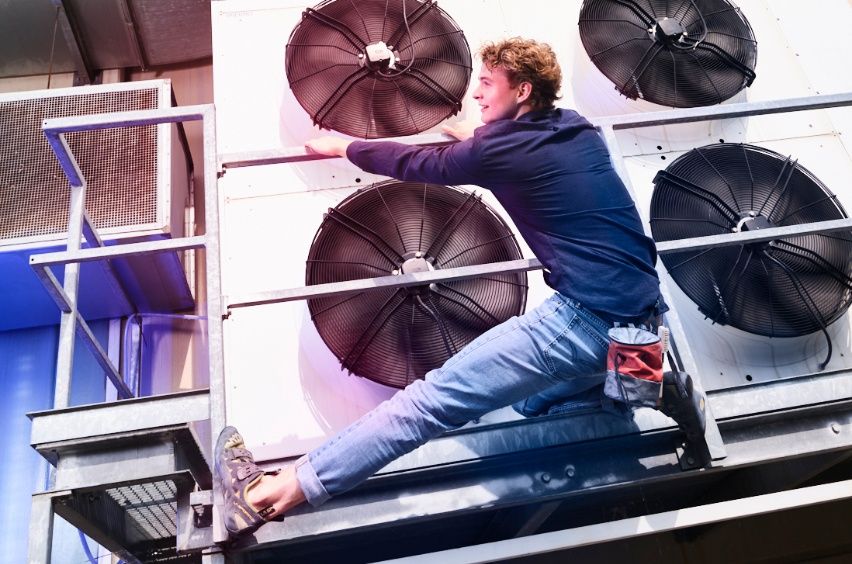
To meet the challenges of digital transformation we need to be open-minded and curious. We have to be able to reflect on things and ask questions about why things are the way they are.
,
What did you study?
I started out studying supply and environmental engineering and then web science. That was basically about seeing the Internet as a whole from different perspectives, like the economy or technology, but also social, sociological and psychological issues.
What challenges do you see in the development of new digital business models?
We definitely have to change the way we work, but I think that this transformation holds a lot of potential for us. Speed, customer proximity and direct feedback are especially important for new digital business models.
What qualities do team members and management need to have?
What matters to me, among co-workers and with management as well, is allowing open and honest feedback in both directions. I think that this is the only way that we can develop good solutions together. Furthermore, if everyone has the chance to contribute their own expertise on top of that, that can lead to something good. Trust is important to me and being able to move things forward by yourself. I think this approach works for us.
Your hobby is bouldering. What do you like about it?
I like bouldering because it works out your whole body, but concentration and figuring out the best approach play a part as well. Obviously, strength is important as well. But you often find that things go better with a different technique. Or you fail at a certain point, so you sit down and go over it in your mind: What did I do, what do I have to do differently next time? It’s totally cool – when you manage it, of course. When you don’t manage it – that can be pretty annoying. Especially when you can feel yourself wearing out and then your next attempt won’t be as good.
That’s a good metaphor …
Yes, and its true for developing new business models as well: Some solutions have to be advanced rapidly so that they can improve quickly.
In bouldering terms, what’s the degree of difficulty in moving the Vaillant Group towards digital business models?
The way I see it is that we’re the ones building the route. And naturally we have to think about who wants to climb it, and what’s important to that person. Then you can start to make it feasible.
What does thinking outside the box mean to you?
It means asking why the box even exists and whether it makes sense. When you ask these questions, you might quickly realise that you have a very limited picture. It helps to put yourself in someone else’s shoes.
Are there opportunities for more sustainability if you change the way you think?
I think so. I believe, for example, that we can make a lot happen with our heating pumps, battery storage and with new fuels as well. Digitalisation is a big lever for achieving the redistribution of regenerative energies. We accomplish something when resource management and digitalisation go hand-in-hand.